Building a Safe…
Every story starts with an idea.
Most of them end somewhere else.
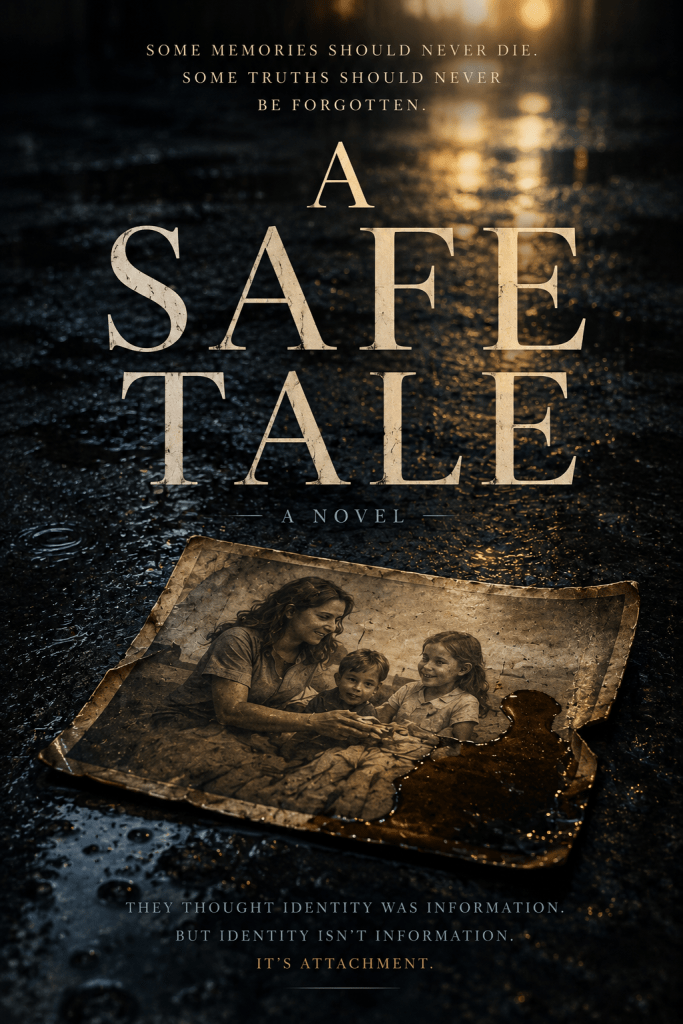
A Safe Tale: Fables of Toyland began as a cyberpunk story about resurrection, artificial intelligence, and the consequences of bringing someone back from the dead. There were corporations, conspiracies, hunters, ghosts, and enough neon rain to flood a city.
But somewhere along the way, the story changed.
Or maybe it remembered what it was always about.
The deeper I went, the less interested I became in the technology and the more interested I became in the people trapped inside it. The question stopped being whether a machine could restore a life. The question became whether a life could ever be reduced to a machine.
The answer arrived unexpectedly.
Not in a laboratory.
Not in a battle.
Not in a revelation about hidden organizations or forgotten technologies.
It arrived in a photograph.
A bent corner.
A child’s drawing.
A ticket stub.
A memory of spilled orange juice.
A thing that should not matter.
And yet somehow does.
That realization transformed the entire novel.
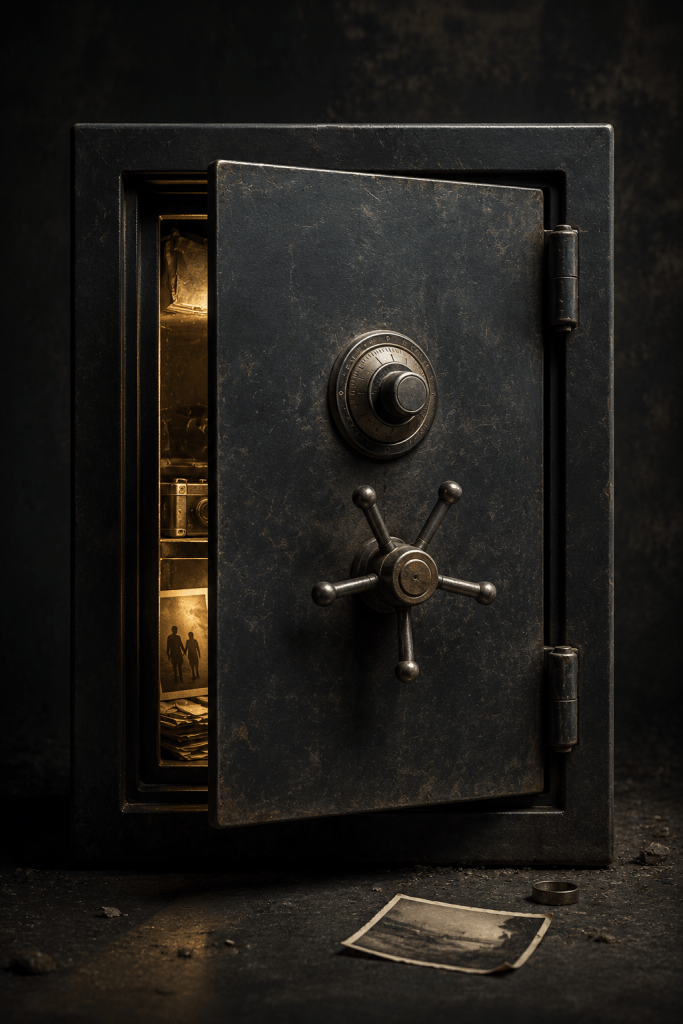
The Safe itself became something different. It was never a vault. It was never a weapon. It was never even a mystery to be solved.
It was a promise.
A promise that some things deserve to survive.
Not because they are valuable.
Because they are meaningful.
There is a difference.
Technology remembers information.
People remember attachment.
The older I get, the more important that distinction becomes.
Maybe that’s why this story took so many years to finish.
Maybe I needed to learn it first.
The final version of A Safe Tale is still strange. It still contains noir detectives, dangerous corporations, nursery rhyme assassins, recursion, memory ghosts, and all the odd little pieces that found their way into the machine.
But beneath all of that is something much simpler.
A man trying to find his way back to the people he loves.
A woman carrying more guilt than she can survive.
A world determined to turn lives into data.
And a stubborn belief that some things cannot be measured, quantified, archived, or owned.
Some things only matter because they mattered to someone.
In the end, that became the story.
And if the story has a lesson, it might be this:
Build things that preserve meaning.
The rest is just storage.
— Jonathan LaBelle
Electric Icarus Publishing