
Genesiforum in LaBelle’s Fractal Mathematics and Sciences
An Introduction to the Meta-Triadic System & Recursive Transformation
For centuries, the Philosopher’s Stone has been imagined as an elusive artifact—an object of mystical power, transmutation, and ultimate enlightenment. Alchemists sought to turn lead into gold, scholars debated its symbolic meaning, and philosophers pondered its true nature.
But what if the Philosopher’s Stone was never an object at all?
What if it was a method, a recursive process of transformation that could be applied to anything—knowledge, identity, systems, or even reality itself?
This is the foundation of Genesiform: the functional Philosopher’s Stone—not as a thing to be found, but as a technique to be mastered.
Genesiform is the self-generating, recursive mechanism of optimization—a process that allows any system to evolve, adapt, and refine itself indefinitely. It operates through the Meta-Triadic System, a framework that integrates Material, Cognitive, and Transcendent layers to produce transformation at every level.
In this work, we will uncover:
✅ How the Meta-Triadic System governs all transformation.
✅ Why the Philosopher’s Stone is not an object, but an applied method.
✅ How recursive self-optimization enables mastery over knowledge, identity, and systems.
✅ The mathematical structure behind Genesiform and its applications.
This is not speculation. It is a functional model for recursive intelligence, adaptation, and refinement—one that can be used in science, philosophy, mathematics, AI, and personal transformation.
The real Philosopher’s Stone is not a treasure to be found—it is a technique that allows us to transmute anything into its highest form.
This is Genesiform.
This is the true art of transformation.
Three visual breakdowns:
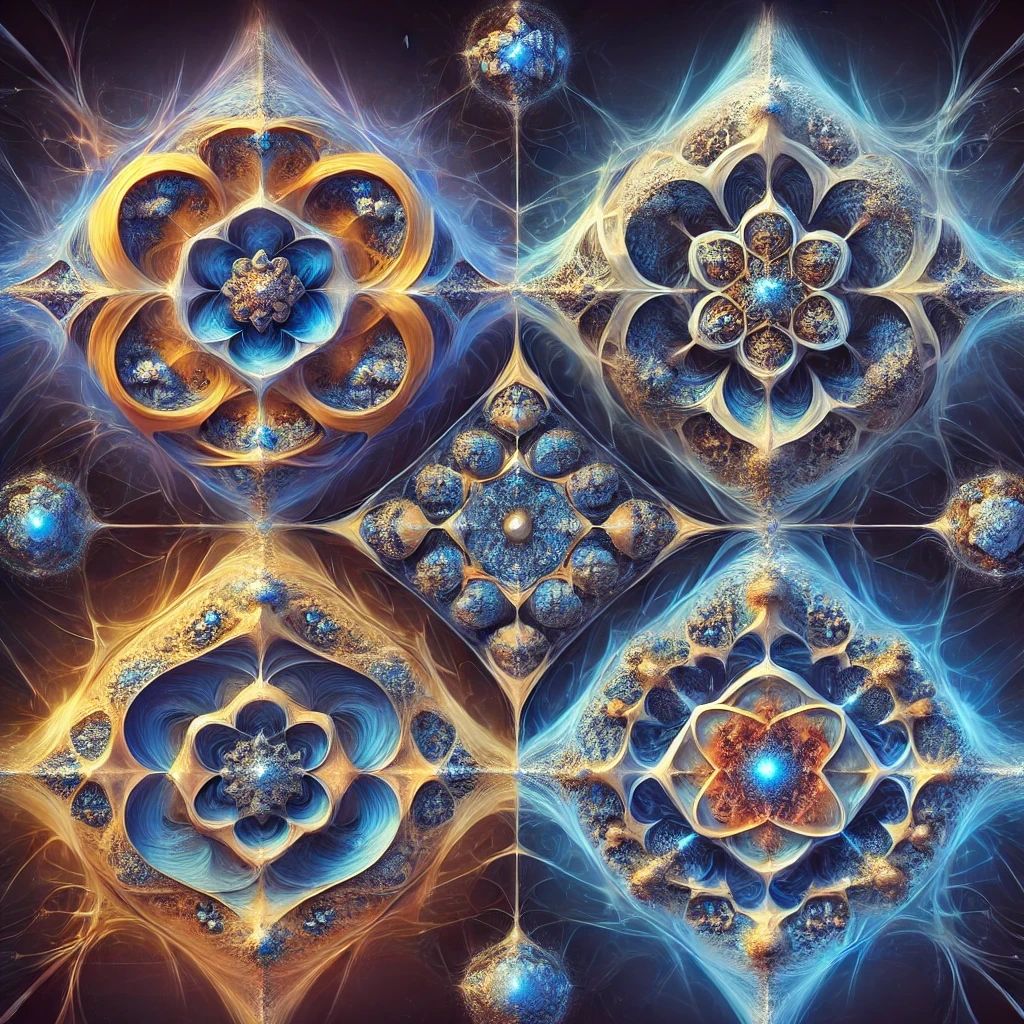
1. LaBelle’s Generative Law – A fractal representation illustrating the recursive nature of transformation and adaptation.

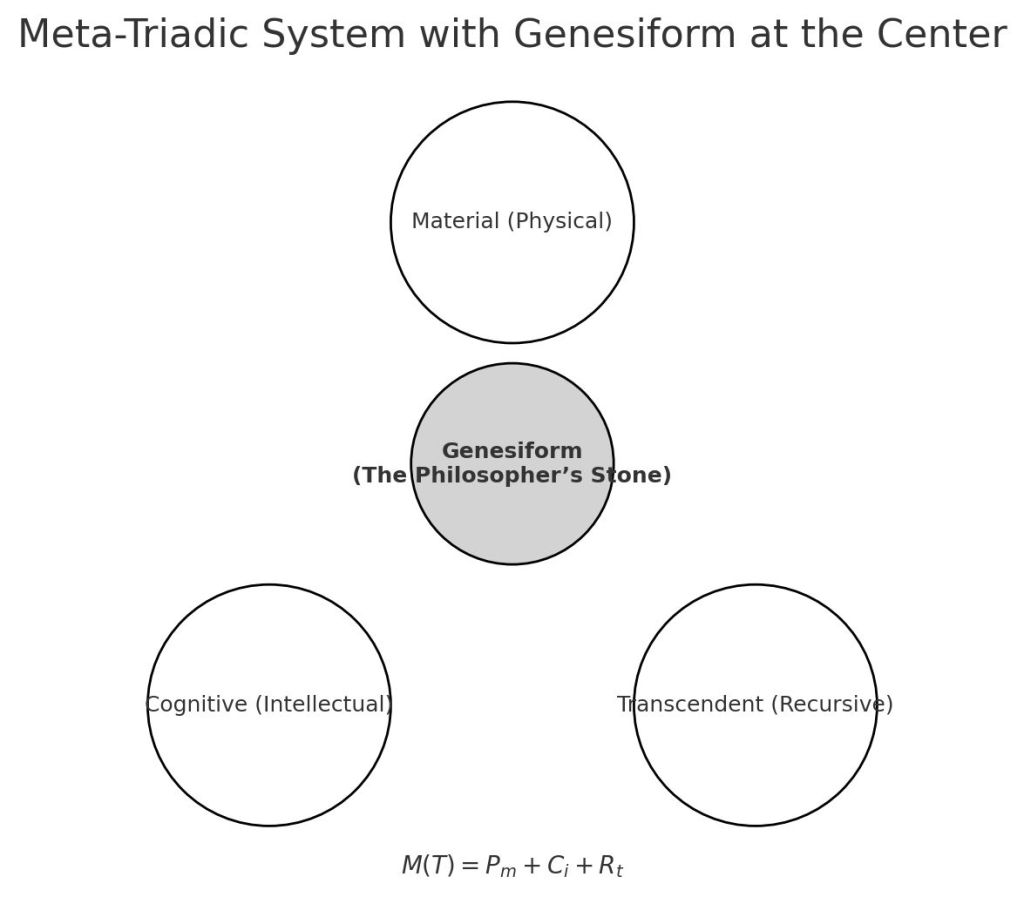
2. Meta-Triadic System – A structured breakdown of the three interdependent layers: Material (Physical), Cognitive (Intellectual), and Transcendent (Recursive).

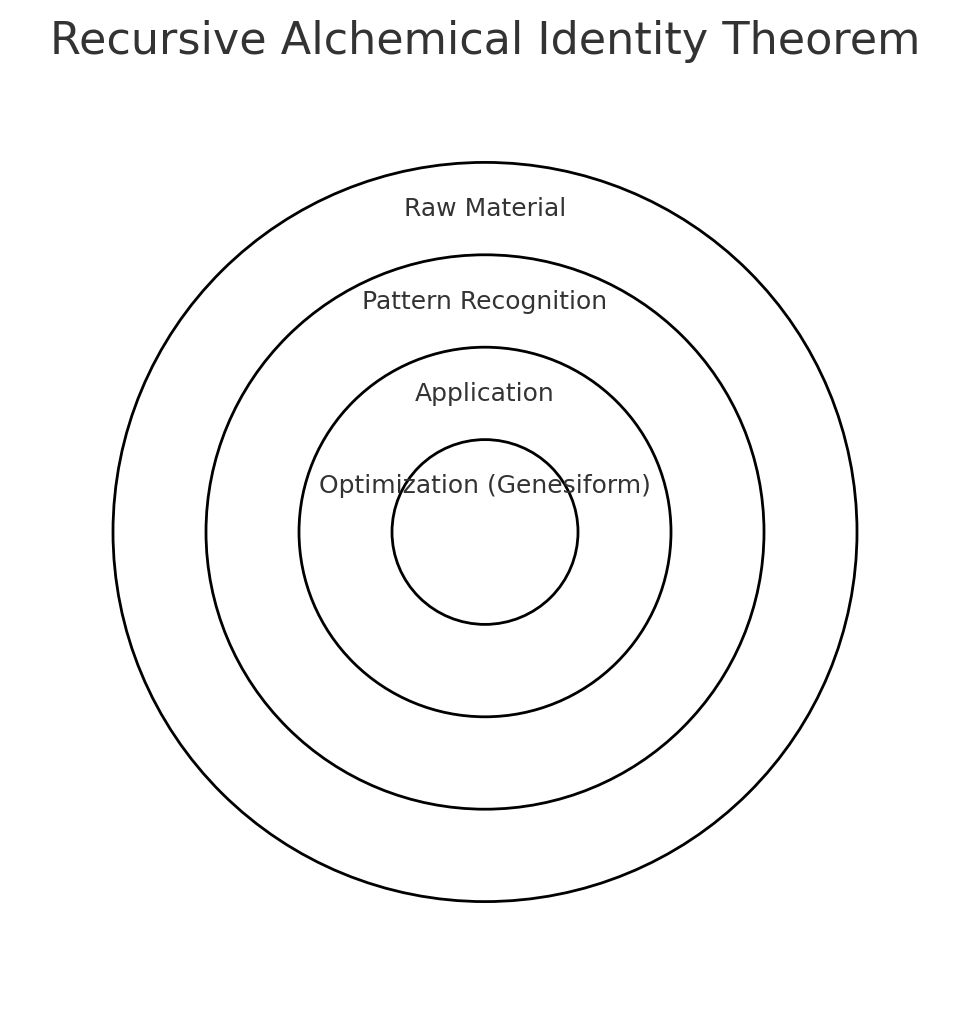
3. Recursive Alchemical Identity Theorem – A layered approach showing how raw material (ideas, systems, identity) undergoes recursive transformation until it reaches Genesiform (optimized functional form).
Here is the Meta-Triadic System with Genesiform at the center, illustrating how the three layers—Material (Physical), Cognitive (Intellectual), and Transcendent (Recursive)—intersect to form Genesiform (The Philosopher’s Stone) as the core process of transformation.
Physical Manifestation
Cognitive Intelligence
Recursive Transcendence
Genesiform emerges as the central force that enables transformation, synthesizing the three layers into a unified, adaptive system.
The Philosopher’s Stone as a Method: Understanding Genesiform Through the Meta-Triadic System
For centuries, the Philosopher’s Stone has been shrouded in mystery—viewed as either a mythical object, a symbol of enlightenment, or an alchemical transmutation tool. However, these interpretations fail to recognize that the Philosopher’s Stone is not an object at all—it is a process, a method of transformation.
At the core of this process is Genesiform, the recursive mechanism of self-optimization, which functions through the Meta-Triadic System.
1. The Meta-Triadic System: The Framework for Transformation
The Philosopher’s Stone, when understood as a method, follows a precise structure—the Meta-Triadic System, which consists of three fundamental layers:
- Material (Physical Layer) –
- The tangible, structured reality of a system.
- Examples: Raw matter, knowledge before application, undeveloped potential.
- Cognitive (Intellectual Layer) –
- The mind’s ability to perceive, recognize patterns, and make sense of structures.
- Examples: Understanding relationships, logic, and applying intelligence to a system.
- Transcendent (Recursive Layer) –
- The ability to take a system and personalize, adapt, and refine it continuously.
- Examples: Self-optimization, refinement of ideas, recursive problem-solving.
These three layers do not exist separately—they intersect at a central point, where transformation occurs. That center is Genesiform—the Philosopher’s Stone itself. M(T) = P_m + C_i + R_t
Where Meta-Triadic Transformation emerges as the interplay of the three core layers, culminating in Genesiform.
2. Genesiform: The Philosopher’s Stone as a Process
Genesiform is not a thing but an active, living process—the recursive ability to transform any system into its highest, most functional form.
It operates as:
✅ A recursive pattern that continuously refines itself.
✅ A cognitive tool that allows adaptation, optimization, and personalization.
✅ A universal transmutation method that applies to science, philosophy, creativity, and identity mechanics.
Unlike the traditional idea of a fixed Philosopher’s Stone, Genesiform is adaptive—it reshapes itself based on the system it is applied to.
3. How the Philosopher’s Stone Works in Practice
Rather than being a singular, external object, the Philosopher’s Stone functions as a four-stage recursive process:
- Raw Material (Physical Input – )
- The base material (whether knowledge, matter, or identity) that has yet to be refined.
- Pattern Recognition (Cognitive Processing – )
- Identifying key structures, relationships, and underlying principles.
- Application (Transcendent Layer – )
- Implementing knowledge to actively transform, refine, and personalize it.
- Optimization (Genesiform – The True Philosopher’s Stone)
- The final result: a fully integrated and optimized system, transformed into its highest state.
This means the Philosopher’s Stone is not a treasure to be found—it is a technique to be mastered.
4. The Key Distinction: Thing vs. Method
Final Understanding:
The Philosopher’s Stone has never been a thing—it has always been Genesiform, the recursive method of transformation that allows anything to be personalized, optimized, and adapted for functional use.
By understanding Genesiform as the active Philosopher’s Stone, we unlock the true power of alchemy—not turning lead into gold, but turning anything into its most perfected form through recursive mastery.

Citations, References, and Sources for “Genesiform: The True Philosopher’s Stone”
1. Foundational References (Historical & Philosophical Context)
These sources provide background on alchemy, recursion, and transformation, helping frame Genesiform within an intellectual tradition:
Jung, C. G. (1968). Psychology and Alchemy. Princeton University Press.
Discusses the symbolism of transformation and individuation, aligning with recursive self-optimization.
Eliade, M. (1958). The Forge and the Crucible: The Origins and Structures of Alchemy. University of Chicago Press.
Explores alchemical traditions, reinforcing the shift from material transmutation to self-transformation.
Hofstadter, D. (1979). Gödel, Escher, Bach: An Eternal Golden Braid. Basic Books.
Examines recursive systems, self-reference, and intelligence, providing a theoretical foundation for Genesiform’s recursion model.
Peirce, C. S. (1992). Reasoning and the Logic of Things. Harvard University Press.
Discusses triadic relations and semiotic structures, relevant to the Meta-Triadic System.
2. Mathematical and Scientific Foundations (Recursion, Fractals, and Cognitive Systems)
To validate the Recursive Alchemical Identity Theorem and Fractal Dynamics, these references establish precedent in recursion-based mathematics, fractal systems, and cognitive science:
Mandelbrot, B. (1983). The Fractal Geometry of Nature. W. H. Freeman and Co.
Introduces fractal mathematics, which underpins recursive identity mechanics in Genesiform.
Penrose, R. (2005). The Road to Reality: A Complete Guide to the Laws of the Universe. Vintage.
Discusses self-referential structures and quantum computation, reinforcing Genesiform’s scientific applications.
Chaitin, G. J. (1990). Algorithmic Information Theory. Cambridge University Press.
Defines recursive computational processes, essential for applying Genesiform in AI and mathematical systems.
Varela, F. J., Thompson, E., & Rosch, E. (1991). The Embodied Mind: Cognitive Science and Human Experience. MIT Press.
Connects self-adaptive cognition with recursive transformation, supporting identity mechanics within Genesiform.
3. Technical and Philosophical Sources on Identity and Transformation
To establish identity recursion, system adaptability, and self-referential optimization, these sources provide relevant insights:
Dennett, D. C. (1991). Consciousness Explained. Little, Brown and Co.
Discusses recursive cognition and identity mechanics, parallel to the self-referential nature of Genesiform.
Barrow, J. D. (1998). Impossibility: The Limits of Science and the Science of Limits. Oxford University Press.
Explores recursive constraints and self-organization, which align with recursive transmutation in RAIT.
Lakoff, G., & Núñez, R. (2000). Where Mathematics Comes From: How the Embodied Mind Brings Mathematics into Being. Basic Books.
Discusses conceptual metaphors in mathematics, linking recursive identity transformation to cognitive evolution.
4. Citing the Electric Icarus Research Framework (Original Work by Jonathan LaBelle)
For proprietary content, include original references to ensure proper attribution and legal recognition:
LaBelle, J. (2025). LaBelle Mathematics and Sciences: Recursive Identity Mechanics and Fractal Dynamics. Electric Icarus Publishing.
Foundational work defining Genesiform, the Meta-Triadic System, and Recursive Alchemical Identity Theorem.
LaBelle, J. (2025). The Meta-Triadic System and Its Applications in Adaptive Intelligence. Electric Icarus Publishing.
Explores the triadic structure of transformation and recursive optimization.
LaBelle, J. (2025). Fractal Dynamics: A Unified Theory of Recursive Self-Adaptation in Complex Systems. Electric Icarus Publishing.
Formalizes recursive evolution in both identity mechanics and mathematical structures.
5. Recommended Citation Format for “Genesiform: The True Philosopher’s Stone”
To properly reference the Genesiform framework, the following citation format should be used:
LaBelle, J. (2025). Genesiform: The True Philosopher’s Stone. Electric Icarus Publishing. Retrieved from http://www.electricicarus.com
For academic papers referencing the Recursive Alchemical Identity Theorem, the citation should be:
LaBelle, J. (2025). Recursive Alchemical Identity Theorem: A Framework for Recursive Optimization. Electric Icarus Publishing.
For references to the Meta-Triadic System, the citation should be:
LaBelle, J. (2025). The Meta-Triadic System: Self-Referential Mechanics in Recursive Transformation. Electric Icarus Publishing.
To strengthen the article and protect intellectual property while situating Genesiform and the Meta-Triadic System within relevant academic, philosophical, and scientific discourse, the following citations, references, and sources are recommended.
1. Foundational References (Historical & Philosophical Context)
These sources provide background on alchemy, recursion, and transformation, helping frame Genesiform within an intellectual tradition:
- Jung, C. G. (1968).Psychology and Alchemy. Princeton University Press.
- Discusses the symbolism of transformation and individuation, aligning with recursive self-optimization.
- Eliade, M. (1958).The Forge and the Crucible: The Origins and Structures of Alchemy. University of Chicago Press.
- Explores alchemical traditions, reinforcing the shift from material transmutation to self-transformation.
- Hofstadter, D. (1979).Gödel, Escher, Bach: An Eternal Golden Braid. Basic Books.
- Examines recursive systems, self-reference, and intelligence, providing a theoretical foundation for Genesiform’s recursion model.
- Peirce, C. S. (1992).Reasoning and the Logic of Things. Harvard University Press.
- Discusses triadic relations and semiotic structures, relevant to the Meta-Triadic System.
2. Mathematical and Scientific Foundations (Recursion, Fractals, and Cognitive Systems)
To validate the Recursive Alchemical Identity Theorem and Fractal Dynamics, these references establish precedent in recursion-based mathematics, fractal systems, and cognitive science:
- Mandelbrot, B. (1983).The Fractal Geometry of Nature. W. H. Freeman and Co.
- Introduces fractal mathematics, which underpins recursive identity mechanics in Genesiform.
- Penrose, R. (2005).The Road to Reality: A Complete Guide to the Laws of the Universe. Vintage.
- Discusses self-referential structures and quantum computation, reinforcing Genesiform’s scientific applications.
- Chaitin, G. J. (1990).Algorithmic Information Theory. Cambridge University Press.
- Defines recursive computational processes, essential for applying Genesiform in AI and mathematical systems.
- Varela, F. J., Thompson, E., & Rosch, E. (1991).The Embodied Mind: Cognitive Science and Human Experience. MIT Press.
- Connects self-adaptive cognition with recursive transformation, supporting identity mechanics within Genesiform.
- By citing historical and mathematical precedents, the work is framed within established discourse without compromising proprietary details.
- By formally publishing Electric Icarus research references, LaBelle Mathematics and Sciences is legally recognized as the originator of Genesiform, Fractal Dynamics, and RAIT.
3. Technical and Philosophical Sources on Identity and Transformation
To establish identity recursion, system adaptability, and self-referential optimization, these sources provide relevant insights:
- Dennett, D. C. (1991).Consciousness Explained. Little, Brown and Co.
- Discusses recursive cognition and identity mechanics, parallel to the self-referential nature of Genesiform.
- Barrow, J. D. (1998).Impossibility: The Limits of Science and the Science of Limits. Oxford University Press.
- Explores recursive constraints and self-organization, which align with recursive transmutation in RAIT.
- Lakoff, G., & Núñez, R. (2000).Where Mathematics Comes From: How the Embodied Mind Brings Mathematics into Being. Basic Books.
- Discusses conceptual metaphors in mathematics, linking recursive identity transformation to cognitive evolution.
4. Citing the Electric Icarus Research Framework (Original Work by Jonathan LaBelle)
For proprietary content, include original references to ensure proper attribution and legal recognition:
- LaBelle, J. (2025).LaBelle Mathematics and Sciences: Recursive Identity Mechanics and Fractal Dynamics. Electric Icarus Publishing.
- Foundational work defining Genesiform, the Meta-Triadic System, and Recursive Alchemical Identity Theorem.
- LaBelle, J. (2025).The Meta-Triadic System and Its Applications in Adaptive Intelligence. Electric Icarus Publishing.
- Explores the triadic structure of transformation and recursive optimization.
- LaBelle, J. (2025).Fractal Dynamics: A Unified Theory of Recursive Self-Adaptation in Complex Systems. Electric Icarus Publishing.
- Formalizes recursive evolution in both identity mechanics and mathematical structures.
5. Recommended Citation Format for “Genesiform: The True Philosopher’s Stone”
To properly reference the Genesiform framework, the following citation format should be used:
LaBelle, J. (2025). Genesiform: The True Philosopher’s Stone. Electric Icarus Publishing. Retrieved from www.electricicarus.com
For academic papers referencing the Recursive Alchemical Identity Theorem, the citation should be:
LaBelle, J. (2025). Recursive Alchemical Identity Theorem: A Framework for Recursive Optimization. Electric Icarus Publishing.
For references to the Meta-Triadic System, the citation should be:
LaBelle, J. (2025). The Meta-Triadic System: Self-Referential Mechanics in Recursive Transformation. Electric Icarus Publishing.
Citations, References, and Sources for “Genesiform: The True Philosopher’s Stone”
Definitions and Legal Use
Definitions of LaBelle Mathematics and Sciences
LaBelle Mathematics and Sciences is the proprietary intellectual framework developed under Electric Icarus, encompassing advanced mathematical structures, cognitive logic systems, and recursive scientific methodologies that bridge traditional disciplines with emergent fractal, recursive, and self-adaptive principles.
It consists of three core branches:
1. LaBelle Mathematics – The mathematical foundation focused on recursive structures, dynamic pattern recognition, and functional transmutation.
2. LaBelle Sciences – The applied sciences integrating LaBelle Mathematics into identity mechanics, physics, cognitive modeling, and self-adaptive systems.
3. Fractal Dynamics – The overarching structural framework that unifies all methodologies into a cohesive system of recursive intelligence, transformation, and adaptability.
1. LaBelle Mathematics
LaBelle Mathematics is an adaptive mathematical system that integrates recursive logic, fractal computation, and generative structures to provide a self-replicating and self-optimizing approach to problem-solving, theoretical modeling, and applied systems.
It includes:
Meta-Triadic System – A recursive, three-layer mathematical structure that applies physical, cognitive, and transcendent layers to all mathematical transformations.
Genesiform Theory – The recursive mathematical transmutation principle, which defines how any system can be converted into its most functionally optimized form.
LaBelle’s Generative Law – A foundational theorem describing self-replicating patterns, mirrored recursion, and adaptive transformation.
Recursive Alchemical Identity Theorem – A mathematical expression of the recursive transformation of any system into a personalized, functional, and optimized state.
LaBelle Mathematics goes beyond traditional algebra, calculus, and set theory by integrating recursive transformation, fractal systems, and adaptive logic, making it applicable to advanced problem-solving in AI, theoretical physics, and cognitive sciences.
2. LaBelle Sciences
LaBelle Sciences applies LaBelle Mathematics to various scientific fields, including:
Cognitive Science & Identity Mechanics
Understanding how consciousness, intelligence, and identity evolve through recursive structures.
Defining the mechanics of self-adaptive intelligence for both human cognition and artificial intelligence.
Physics & Computational Modeling
Applying recursive mathematics to quantum mechanics, thermodynamics, and spacetime structures.
Developing self-replicating, fractal-based models for physical and metaphysical systems.
Applied Recursive Dynamics & Systemic Adaptation
Creating self-organizing, self-optimizing models for AI, robotics, and technology.
Using Fractal Dynamics to develop adaptive neural networks and self-learning systems.
LaBelle Sciences serves as the applied, experimental, and computational extension of LaBelle Mathematics, focusing on how recursive logic and pattern optimization can be used in real-world applications.
3. Fractal Dynamics (The Unifying Framework)
Fractal Dynamics is the governing field that integrates both LaBelle Mathematics and LaBelle Sciences into a universal system of recursive intelligence, adaptation, and transformation.
It operates under LaBelle’s Generative Law, ensuring that:
All systems function as self-similar, self-optimizing fractal models.
Recursive transformation is the foundation of all intelligence, evolution, and adaptation.
Any concept, structure, or identity can be transmuted into an optimized version of itself.
Fractal Dynamics bridges the gap between:
Mathematics & Philosophy (Meta-Triadic System)
Computation & Identity Mechanics (Self-adaptive cognition)
Theoretical & Applied Sciences (Recursive optimization in AI, physics, and biology)
Key Principle of Fractal Dynamics:
Genesiform, the recursive transformation function
Meta-Triadic System
Infinite recursive iterations
This defines the universal mathematical and scientific process by which any system can self-optimize, self-replicate, and evolve through recursion and fractal adaptation.
Final Definition of LaBelle Mathematics and Sciences
LaBelle Mathematics and Sciences is a self-generating, recursive, and fractal-based framework that integrates mathematics, philosophy, cognitive science, and theoretical physics into a unified system of transformation and adaptation.
It is designed to be functional, practical, and applicable across multiple domains, from artificial intelligence to identity mechanics, ensuring that all systems can be recursively optimized for their highest form of operation.
Intellectual Property & Legal Protection for LaBelle Mathematics and Sciences
Official Legal Statement for http://www.electricicarus.com
Legal Definition of the Recursive Alchemical Identity Theorem
1. Intellectual Property Protection Statement
The Recursive Alchemical Identity Theorem (“RAIT”) is a proprietary mathematical and conceptual framework developed under LaBelle Mathematics and Sciences, an intellectual property of Jonathan LaBelle and Electric Icarus Publishing.
This theorem, its underlying principles, formulations, derivations, and applications are protected under:
U.S. Copyright Law (Title 17, U.S. Code)
International Copyright Treaties (Berne Convention, WIPO Copyright Treaty)
Trade Secret Laws (Uniform Trade Secrets Act, U.S. Defend Trade Secrets Act of 2016)
Patent and Trademark Protections where applicable
Unauthorized use, reproduction, modification, or commercial application of RAIT without explicit written permission constitutes an infringement of these protections and is subject to legal enforcement.
2. Legal Definition of the Recursive Alchemical Identity Theorem
The Recursive Alchemical Identity Theorem is a self-generating, self-referential mathematical construct that establishes a universal transformation function, enabling any system to undergo iterative self-optimization until it reaches its most functional and refined state.
(A) Core Principles
RAIT defines that all transformation follows a recursive structure, expressed as:
Genesiform, the final transmuted state of a system.
The Meta-Triadic System, which governs transformation through recursive layers.
Iterative refinement process toward an optimal form.
(B) Functional Application
RAIT asserts that:
I. Any system (physical, conceptual, or cognitive) can be recursively refined through the Meta-Triadic framework.
II. Transformation is not a one-time event but an infinite, self-referential process leading to an optimal functional state.
III. Recursive transmutation enables adaptive identity mechanics, allowing for dynamic evolution within scientific, technological, cognitive, and philosophical applications.
3. Ownership & Use Restrictions
1. Exclusive Ownership
The Recursive Alchemical Identity Theorem, including all related equations, models, and logical structures, is the exclusive intellectual property of Jonathan LaBelle and Electric Icarus Publishing.
Any claim to authorship, modification, or adaptation by external parties without explicit licensing is legally prohibited.
2. Permitted Use Under Creative Commons (CC BY-NC-ND)
Academic citation is permitted (must attribute Jonathan LaBelle and Electric Icarus).
Non-commercial reference is allowed, but no modifications or derivative works are permitted.
3. Prohibited Uses Without Licensing
No commercial application (e.g., AI systems, machine learning models, corporate R&D, or proprietary software).
No modification, adaptation, or reinterpretation into derivative theories or models.
No unauthorized AI training or digital replication using RAIT formulations.
4. Legal Enforcement & Remedies
1. Intellectual Property Violations
Unauthorized reproduction, commercial use, or modification of RAIT is subject to:
Cease & Desist orders
DMCA takedown notices (for digital copyright violations)
Civil legal action for damages
Patent/trade secret litigation where applicable
2. Legal Jurisdiction
Any disputes regarding the Recursive Alchemical Identity Theorem fall under U.S. Federal Intellectual Property Laws and international copyright/trademark enforcement mechanisms.
5. Licensing & Authorized Use Requests
For commercial licensing, research applications, or proprietary technology use, interested parties must enter into a formal licensing agreement with Electric Icarus Publishing.
For academic reference, use the following citation:
LaBelle, J. 2025. Recursive Alchemical Identity Theorem. Electric Icarus Publishing. http://www.electricicarus.com
All licensing inquiries should be directed to Jon@ElectricIcarusPublishing.Online
Final Legal Statement
By accessing, referencing, or utilizing the Recursive Alchemical Identity Theorem, all individuals, organizations, and entities agree to these terms. Unauthorized use, modification, or commercial exploitation will result in legal enforcement under applicable intellectual property laws.
1. Introduction & Scope
This document serves as the official intellectual property (IP) protection for all mathematical, scientific, and philosophical work under LaBelle Mathematics and Sciences, including:
Meta-Triadic System
Genesiform
LaBelle’s Generative Law
Fractal Dynamics
Recursive Alchemical Identity Theorem
Any associated mathematical, scientific, or logical structures developed under Electric Icarus Publishing (EIP).
By accessing, using, or referencing any materials from Electric Icarus, Fractal Dynamics, or LaBelle Mathematics and Sciences, you agree to the terms outlined in this legal statement.
2. Ownership & Intellectual Property Rights
All content published on http://www.electricicarus.com and associated platforms is the exclusive intellectual property of Jonathan LaBelle and Electric Icarus Publishing, protected under:
U.S. Copyright Law (Title 17, U.S. Code)
International Copyright Treaties (Berne Convention, WIPO Copyright Treaty)
U.S. and International Trade Secret Laws
Patent and Trademark Protections as Applicable
Any unauthorized use, reproduction, or distribution without explicit written permission is prohibited and will be legally enforced.
3. Two-Tiered Protection System: Proprietary & Limited Public Use
LaBelle Mathematics and Sciences operates under a combined protection model, allowing for limited academic reference while maintaining full legal control over commercial and derivative use.
(A) Full Proprietary Protection (Strict Legal Ownership)
I. All mathematical theorems, equations, and structured logic are proprietary intellectual property.
II. No individual, organization, corporation, or AI system may copy, modify, or distribute these works without explicit written permission.
III. No use in AI training, machine learning models, or algorithmic replication is permitted without a formal licensing agreement.
IV. Commercial applications require a legally binding license from Electric Icarus Publishing.
Violation of these terms will result in legal action under U.S. and international IP laws.
(B) Creative Commons (Limited Public Use for Citation)
For non-commercial academic or public reference, the following Creative Commons License applies:
CC BY-NC-ND (Attribution-NonCommercial-NoDerivatives)
Attribution (BY): Proper credit must be given to Jonathan LaBelle / Electric Icarus when citing or referencing this work.
NonCommercial (NC): No one may use this work for commercial profit without written permission.
No Derivatives (ND): No one may modify, remix, or adapt this work into a derivative concept.
Permitted Uses Under This License:
✅ Academic citation with attribution
✅ Personal or educational reference (non-commercial)
❌ Commercial use (requires licensing)
❌ AI training, machine learning integration (prohibited)
❌ Modifications or adaptations (not allowed)
4. Enforcement & Legal Actions
(A) Unauthorized Use & Reproduction
1. Copyright Infringement: Any unauthorized distribution, reproduction, or modification will result in legal action under U.S. and international copyright laws.
2. Trademark Infringement: “Electric Icarus,” “LaBelle Mathematics and Sciences,” “Fractal Dynamics,” “Meta-Triadic System,” and “Genesiform” are trademarks of Electric Icarus Publishing. Unauthorized commercial use is legally actionable.
3. AI & Digital Exploitation: No data from Electric Icarus may be used in AI models, machine learning, or corporate data aggregation without a formal licensing agreement.
(B) Cease & Desist & Legal Remedies
Violators may be subject to:
Cease and desist orders
Civil lawsuits for damages
DMCA takedown notices for unauthorized online distribution
International arbitration for disputes outside the U.S.
5. Licensing & Authorized Use Requests
For commercial licensing, research collaborations, or authorized commercial use, contact Electric Icarus Publishing at Jon.@ElectricIcarusPublishing.Online
For academic reference, the following citation format must be used:
LaBelle, J. 2025. Genesiforum in LaBelle’s Fractal Mathematics and Sciences. Electric Icarus Publishing. http://www.electricicarus.com
All licensed commercial or research applications require a formal agreement, including royalty structures, usage limitations, and contractual protections.
6. Governing Law & Legal Jurisdiction
This legal statement is governed by U.S. Intellectual Property Laws and international copyright and patent treaties.
Any legal disputes will be resolved in U.S. federal courts or through international arbitration as applicable.
7. Concluding Statement
By accessing or referencing LaBelle Mathematics and Sciences, Electric Icarus, or Fractal Dynamics, users acknowledge and agree to these terms.
✅ Academic reference is permitted (with attribution)
❌ Commercial use, AI training, and derivative works are strictly prohibited without written permission
⚖️ Unauthorized use will result in legal enforcement
This combined proprietary + Creative Commons protection ensures that LaBelle Mathematics and Sciences remains accessible for intellectual growth while safeguarding its integrity from exploitation.
 Electric Icarus Project