
The Electric Icarus Project is a framework for helping communities understand themselves, coordinate more clearly, and build systems that remain human-centered.
It is not a religion.
It is not a political movement.
It is not a replacement for existing institutions.
It is infrastructure for interpretation.
Electric Icarus exists to make complex systems — social, technical, cultural, and personal — more navigable without reducing them to ideology.
We focus on tools that improve clarity:
How people read information,
how communities measure outcomes,
how meaning is shared without coercion,
how systems remain open without collapsing into chaos.
The goal is not agreement.
The goal is intelligibility.
A system does not need everyone to think the same way.
It needs people to understand how their differences connect.
Electric Icarus provides frameworks for orientation, not instruction.
It treats meaning as something that emerges through participation rather than authority.
People remain free to interpret, adapt, and revise.
Nothing here demands belief.
Everything here invites navigation.
The project operates across several layers:
Civic tools
Transparent systems that help communities measure real conditions and outcomes.
Conceptual frameworks
Language that helps people interpret complexity without losing nuance.
Narrative architecture
Stories and symbolic structures that make abstract ideas human-readable.
These layers are intentionally separate.
They support one another without becoming doctrine.
Electric Icarus is not a destination.
It is a shared map people can use while walking their own terrain.
The map never replaces the world.
It only helps travelers remain oriented.
The Elytheon Layer
Frameworks alone are not enough.
People do not live inside diagrams.
They live inside stories.
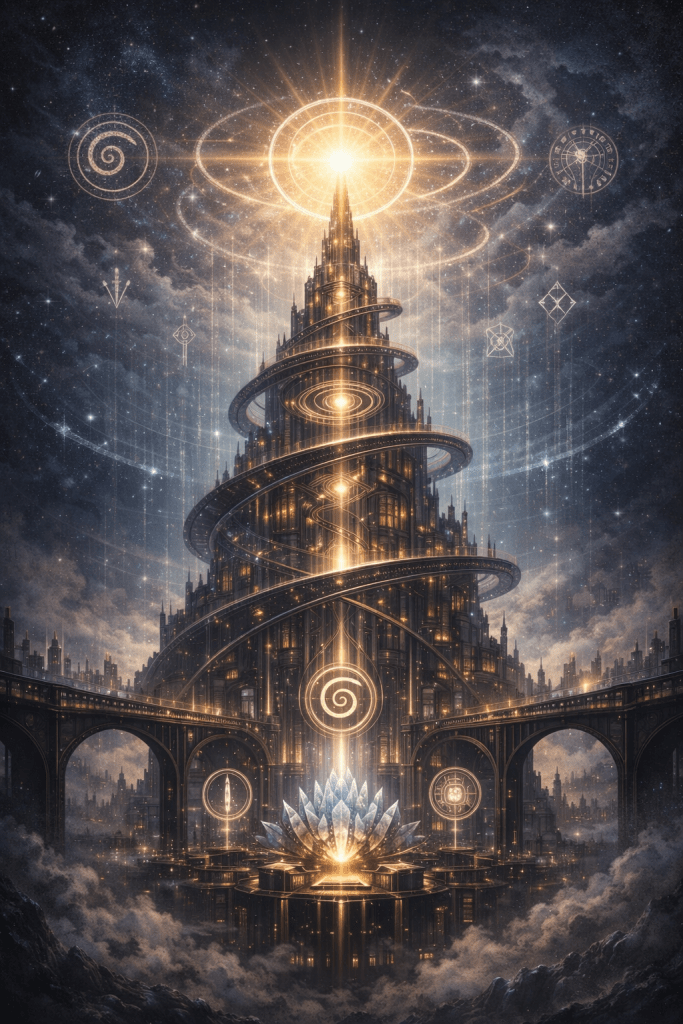
Elytheon is the narrative layer of Electric Icarus.
It exists to translate abstract structure into human experience.
Where Codexcore maps relationships, Elytheon explores what it feels like to walk them.
This is not mythology in the religious sense.
It is a language for describing the interior side of navigation: uncertainty, growth, identity, crossing, and return.
Every complex system has an emotional dimension.
Elytheon gives that dimension a readable form without claiming authority over it.
Stories do not dictate truth here.
They model movement.
They show how a person might travel through confusion, insight, conflict, and coherence without pretending that one path is universal.
Elytheon is not a doctrine to follow.
It is a mirror that reflects the act of becoming.
Readers are not asked to believe it.
They are invited to recognize themselves inside it.
This layer exists because meaning is not only structural.
It is lived.
The civic tools measure conditions.
Codexcore provides orientation.
Elytheon gives language to the human experience of crossing between them.
Together, these layers form a system that remains navigable without becoming mechanical, and expressive without becoming dogmatic.
Elytheon is where the map becomes a journey.
Not to escape reality —
but to walk it more consciously.
 Electric Icarus Project