

Electric Icarus Project exists as a set of tools that helps communities understand and measure real-world conditions, improve outcomes, and expand opportunity through transparent tools, education, and local participation.
We focus on what can be seen, verified, and improved.
What We Do:
1) Measure what matters
We provide clear, community-facing metrics for:
Air, water, and environmental conditions
Energy reliability and infrastructure stress
Climate risk and mitigation progress
These measurements are used to guide funding, policy decisions, and local action.
2) Expand access to education and work
Through Quantum University, EIP supports:
Skill-based learning.
Project and apprenticeship pathways.
Portfolio-based proof of ability.
If someone can do the work, they should be able to prove it.
3) Support local creative and economic ecosystems
We help communities:
Document their work and progress.
Publish local knowledge and culture.
Help communities recognize and reward meaningful contribution.
Stories, skills, and service all count.
What We Do Not Do:
We do not conduct surveillance.
We do not sell personal data.
We do not promote political ideology.
We do not replace governments or institutions.
Participation is opt-in, transparent, and revocable.
Governance & Ethics:
Data collection is minimal, consent-based, and purpose-limited.
Community dashboards are public and auditable.
Oversight processes are documented and open to community review.
EIP systems are designed to integrate with existing institutions, not override them.
Our Commitment:
We believe trust is earned through:
Clear Boundaries
Visible Outcomes
Accountability & Respect for Local Autonomy
EIP Exists to Augment Communities, Not Control Them.
The Electric Icarus Project provides tools, frameworks, and educational resources intended to support community understanding and collaboration. EIP does not guarantee outcomes, replace professional expertise, or assume responsibility for decisions made by participants or institutions. Outcomes depend on local conditions, participation, and institutional decision-making, and EIP bears no responsibility for the use or interpretation of its materials.
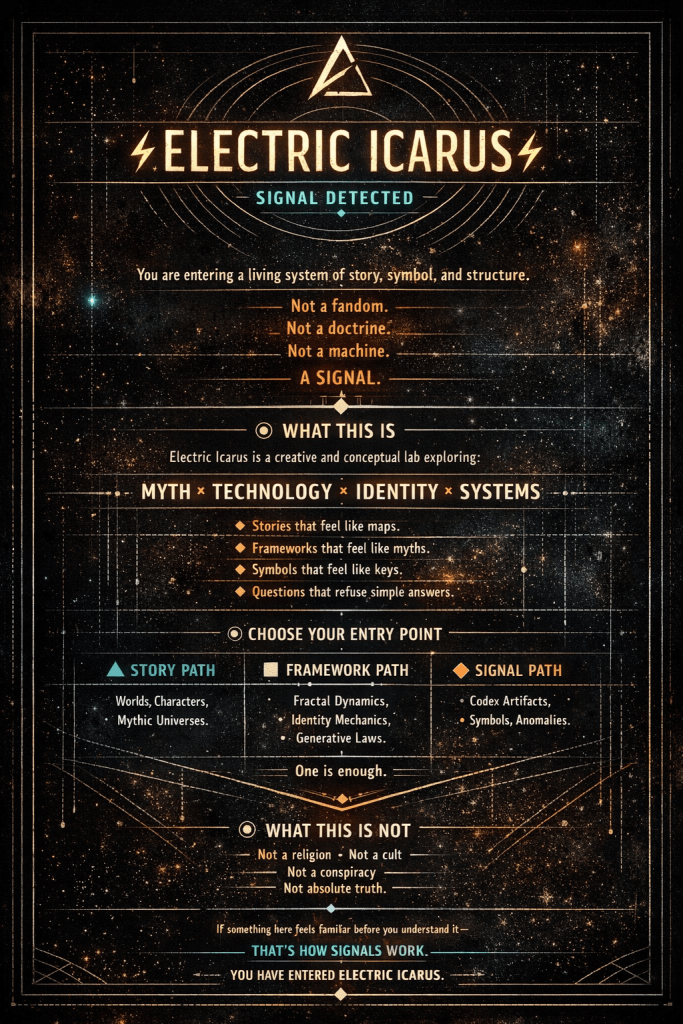
EIP is a conceptual and educational framework, not a legal entity exercising authority or regulatory power.
 Electric Icarus Project